
NEWS
Taylor Swift’s Last Album Sparked Bizarre Accusations of Nazism. It Was a Coordinated Attack Data analysis of social media posts painting the singer as a Trump supporter or white supremacist revealed a network of inauthentic accounts

Taylor Swift’s Last Album Sparked Bizarre Accusations of Nazism. It Was a Coordinated Attack
Data analysis of social media posts painting the singer as a Trump supporter or white supremacist revealed a network of inauthentic accounts
The early October release of Taylor Swift’s The Life of a Showgirl was, like the arrival of any new music from the colossal pop star, a marquee event. As it scaled the charts to become the fastest-selling album in history, fans and detractors alike picked its dozen songs apart like forensic investigators — but they went far beyond analysis of the lyrics. People also scrutinized the artwork on the varied versions of the LP and CD, as well as the merchandise rolled out to accompany Swift’s ode to artistic and romantic triumph, hunting for the Easter eggs she likes to scatter throughout the landscape of her meticulously managed personal brand.
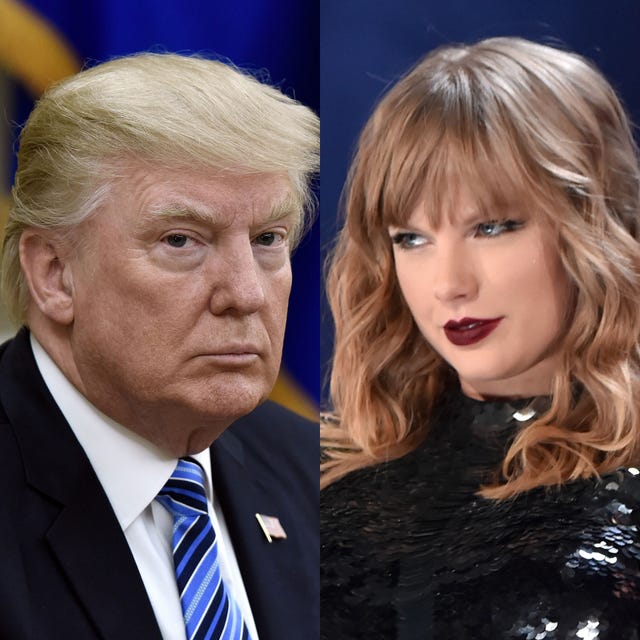
Soon, online discussion of the album turned extreme in ways that many found bewildering. There were social media posts accusing Swift of implicitly endorsing the MAGA movement, trad-wife gender norms, and even white supremacy with dogwhistle references. While the far-right have been known to claim the singer as an icon of “Aryan” greatness despite her record of championing Democrats and liberal values — and President Trump himself has blithely and disingenuously shared AI-generated imagery depicting her as a supporter — this was a noticeably divergent trend, an apparent attempt to cancel Swift for those presumed affiliations. The attacks largely focused on specific word choices (her use of the term “savage” on the song “Eldest Daughter” was interpreted as racist) and symbols (a necklace for sale on her website stirred up Nazi comparisons because its lightning bolt charms bore a passing resemblance to the bolt pattern worn by the SS).
These ridiculous charges led Swifties to bemoan the current political climate, admonishing left-leaning commentators for going overboard in their attempts to identify signs of cryptofascism in Swift’s work. “It’s depressing because reactions like these end up making everyone who genuinely cares about social progress look ridiculous,” wrote one fan on Reddit. “The more exaggerated the discourse becomes, the more it plays directly into the right’s narrative that liberals are hysterical, moralizing, and incapable of nuance.”

BREAKING BOMBSHELL: Americans Left Speechless as Donald Trump and Kamala Harris Reportedly Wed in Secret Ceremony

IT’S ILLEGAL: Trump’s New Executive Order Just Banned This in Every US Workplace.

BREAKING: Former NFL Star and Eagles Legend Jason Kelce Reportedly Dead After…
![Breaking: Nation in Shock as Former Secretary of State John Kerry Passes Away at [Age]](https://tunezsell.com/wp-content/uploads/2026/03/img_1773528035717_1-80x80.jpg)
Breaking: Nation in Shock as Former Secretary of State John Kerry Passes Away at 82

Sad News: Legendary Hollywood Star Chuck Norris Dies Days After Marking His 86th Birthday

JUST IN: Hollywood Icon Morgan Freeman Confirmed Dead — The Final Moments Are Leaving Fans Heartbroken

OMG: Jennifer Lopez, 58, Welcomes Twins With New Boyfriend — Her Latest Post Has Fans Completely Stunned.”

Tragedy strikes the NFL: Legendary quarterback Tom Brady dead at 48 following a fatal accident.”

GONE TOO SOON: Kelce and Swift Perish in Tragic Yesterday Collision

“I AM SHAKING. 😭💔 It’s over. Taylor just found out about the ‘Other Woman’ and the secret child Travis has been hiding for 3 years. The photos are out. ‘I never knew him at all.’ SEE THE LEAKED DNA PAPERS AND THE GIRL BELOW… 👇

BREAKING NEWS: U.S. President Donald Trump Announces the Sudden Death of His Son, Barron Trump
